
The text: "The wicked strut about on every side When vileness is exalted among the sons of men" (Psalm 12:8 NAS)
A ton of illustrations (h-t JeanS at FR.)
Tuesday, March 28, 2006


Sunday, March 26, 2006
"ABDUL RAHMAN TO BE RELEASED" -- if they can't get him killed first? (Scroll for updates)
Michelle Malkin has the best summary I've seen of the latest development in this case, on which I commented previously.
So, the judge is saying that there's "insufficient evidence" to convict him of conversion? Sounds like a very poor waffle-job, to ease international pressure. But it gets a bit worse. "Earlier Sunday he was moved to a notorious maximum-security prison outside Kabul that is also home to hundreds of Taliban and al-Qaida militants." Okay, now, correct me if I'm wrong -- but doesn't that mean he's been put in the middle of criminals compared to whom his would-be executioners are "moderates"?
So they can't convict him, but they don't release him. Instead, they put Rahman in with hardcores who think that the men who were going to behead him are lightweights.
It sure sounds to me as if the government is hoping that the prisoners will kill Rahman for them, and solve their little problem. Leave him in the yard with the others, guards turn their backs for five minutes then pick up the body, government expresses regret, US money and aid continue to pour in. Am I getting any part of this wrong?
Either way, there's no reform visibly going on.
Not upping my optimism-quotient.
Then note this sad observation: "...Rahman had also been begging his guards to provide him with a Bible."
Surely the media, who were all over the (false) story of American Koran-abuse, will be all over this denial.
Right.
"Remember those who are in prison, as though in prison with them, and those who are mistreated, since you also are in the body" (Hebrews 13:3).
Do join me in praying that my fears are proven dead-wrong. Pray with me that this man's faith holds strong, that God's hand of blessing be on him and his testimony, that those about him be turned to Christ through it, and that he be released soon. God grant that we see His glory in this situation.
UPDATE: Mark Steyn clears his throat more eloquently than I write, and he has written on this (h-t Michelle, linked above).
UPDATE II: And now he's out, and he's vanished. I hope he's protected, and being hustled out of the country. Which brings us to another not-a-proud-moment-to-be-an-American:
Meanwhile, Italy (whom we Americans have often mocked) offered him asylum. Did we do even that much? I haven't read so.
So, the judge is saying that there's "insufficient evidence" to convict him of conversion? Sounds like a very poor waffle-job, to ease international pressure. But it gets a bit worse. "Earlier Sunday he was moved to a notorious maximum-security prison outside Kabul that is also home to hundreds of Taliban and al-Qaida militants." Okay, now, correct me if I'm wrong -- but doesn't that mean he's been put in the middle of criminals compared to whom his would-be executioners are "moderates"?
So they can't convict him, but they don't release him. Instead, they put Rahman in with hardcores who think that the men who were going to behead him are lightweights.
It sure sounds to me as if the government is hoping that the prisoners will kill Rahman for them, and solve their little problem. Leave him in the yard with the others, guards turn their backs for five minutes then pick up the body, government expresses regret, US money and aid continue to pour in. Am I getting any part of this wrong?
Either way, there's no reform visibly going on.
Not upping my optimism-quotient.
Then note this sad observation: "...Rahman had also been begging his guards to provide him with a Bible."
Surely the media, who were all over the (false) story of American Koran-abuse, will be all over this denial.
Right.
"Remember those who are in prison, as though in prison with them, and those who are mistreated, since you also are in the body" (Hebrews 13:3).
Do join me in praying that my fears are proven dead-wrong. Pray with me that this man's faith holds strong, that God's hand of blessing be on him and his testimony, that those about him be turned to Christ through it, and that he be released soon. God grant that we see His glory in this situation.
UPDATE: Mark Steyn clears his throat more eloquently than I write, and he has written on this (h-t Michelle, linked above).
UPDATE II: And now he's out, and he's vanished. I hope he's protected, and being hustled out of the country. Which brings us to another not-a-proud-moment-to-be-an-American:
Asked whether the U.S. government was doing anything to secure Rahman's safety after his release, State Department spokesman Sean McCormack said in Washington that where he goes after being freed is "up to Mr. Rahman."I can only hope this wimpy, waffly, spineless talking masks a whole lot of doing that we'll find out about later.
Meanwhile, Italy (whom we Americans have often mocked) offered him asylum. Did we do even that much? I haven't read so.
Friday, March 24, 2006
PCUSA = Ichabod, reason #3479
Check this.
Shh! Ooh... what's that?
Did I just hear J. Gresham Machen, up in Heaven, saying, "Yeah -- well, duh!"?
Shh! Ooh... what's that?
Did I just hear J. Gresham Machen, up in Heaven, saying, "Yeah -- well, duh!"?
Thursday, March 23, 2006
Book Review: "Help! Mom! Hollywood's in My Hamper!", by Katharine DeBrecht
by Katharine DeBrecht; illustrated by Jim Hummel
World Ahead publishing; 2006 ; np
; np
; np The truism runs that sequels are never as good as their predecessors. A number of movies have challenged that truism, as others have confirmed it. In this sequel to Help! Mom! There are Liberals Under My Bed! (reviewed here), Katharine DeBrecht has actually topped herself.
Hamper tells the story of two sisters, Janie and Sam, who want to save enough money to buy a special bike. They decide to earn the money through babysitting.
However, they do love their TV, and through it are aquainted with the world of Hollywood. Their "favorite TV show" is called "Stars Know Best." (Does the picture of Whoopi Goldberg leering out of the idiot-box qualify this as a horror story?)
Their plans start out all right -- until the first night. Their closet doors burst open, and they're invaded by Hollywood starlet "Daisy Smears," who looks an awful lot like another recent pop tart, who still makes occasional tabloid headlines. Daisy persuades them that her line of accessories are "all the rage," and gets them to buy an official Daisy Flowerpot Hat.
She takes all their money, leaves them with flowerpots, and heads off to be the special guest at the Boycott Velcro March. Why? "They need me because I am a STAR--which makes me an EXPERT on everything!"
This pattern repeats every night, as a different star pops out of their closet, sells them something they don't need so that they can be fashionable, and takes all their money. It's sort of a case of The Lyin', the Rich, and the Wardrobe. In the course, they disrespect the girls' upbringing, family, and values.
Every time, the star makes a sale, then exits to appear at some worthless cause. Each always point out that her presence at these events is necessary because she's a star, "and therefore an EXPERT." But as the girls' behavior (and dress) changes, they find babysitting jobs harder to come by. Finally, they dump the junk they'd been sold, and go out to play with a girl who had simply babysat, earned the money, kept it, and bought the cool bike.
I read this to my family of six, ranging in age from six to me. Everybody enjoyed, everyone laughed at some point or other. We all agreed that the humor was better-conceived and better-executed than the first book; and there was a lot of it. The title even fits the story this time! My youngest boys (6 and 10) loved it, wanted to read it again right away.
The illustrations and caricatures were well-done, the likenesses unmistakable. The art had its own jokes, often aimed at older readers, in addition to what was in the text (Larry King scowling, Oprah running around with a copy of Toenailology for Tots). In this way, the book was a bit reminiscent of Pixar's wonderful productions like Toy Story, which works on many levels of maturity.
On the other hand, Hamper's very strength is one of its weaknesses. Topicality limits shelf-life. Hamper is a great read for kids now, and will be for a few years. However, it can't replace Hop on Pop, because the day isn't far off when kids won't know who Brittney Spears, Madonna, Barbra Streisand, or Hillary Clinton even are. (The sooner, the better.)
Another criticism: the denouement is not fully-realized. The girls just shrug off the glitzy paraphernalia, and go out to play. We're not sure exactly what they learned, or why, or what will change for them. Their biggest realization is that they have no good reason to want to try to look or act like the stars, and that they themselves are "experts" at being themselves.
But this is to replace one relativist value with another. The sisters had mentioned church in passing, once. But no one is on the scene to remind them of Jesus' probing question: "For what does it profit a man to gain the whole world, and forfeit his soul?" (Mark 8:36).
In fact, this "value" that they embrace at the end is the very "value" that Hollywood constantly preaches: be true to yourself, above all else. If you really feel it deeply in your heart, do it, it's good, because you're good. Perhaps the glitterati are more shallow and openly destructive in their pursuit of the great god Self, but it is the same idol either way. Jesus singled out two commandments, and neither one was "Be yourself" (Matthew 22:34-40).
That message is absent from the book. The diagnosis, then, is pretty good; the prescription misses the ten-ring.Still, one has to love the skewering that Hollywood gets in this book. The point can't be made often enough, nor in enough ways, that most "stars" get a soapbox through no personal qualities  or achievements beyond their looks, and/or their ability to pretend to be other people, and say things others have written for them.
For instance, I loved The Lord of the Rings. But the idiot who very ably played Aragorn (Viggo Mortensen) used his fame to go around trashing our country, the war, and our president. I thought at the time that Mortensen really should preface every appearance with the statement: "I am not a person of character, nobility, morals, or accomplishment -- but I play one in a movie; so...."
Here's another example, hot off the press. Carlos Santana uses the talent God gave him, and the freedom American soldiers died to safeguard for him -- to do what? To bash the President and our war against terror -- on foreign soil. What are his qualifications to speak on foreign policy? He's a rock star. That's it.
Santana uses that platform, his status as an expert because he's a celebrity, to extrude such profundities such as these:
I have wisdom. I feel love. I live in the present and I try to present a dimension that brings harmony and healing. My concept is the opposite of George W. Bush. ...There is more value in placing a flower in a rifle barrel than making war. ...As [noted expert-on-everything] Jimi Hendrix used to say, musical notes have more importance than bullets.Yeah, see, you can't get insights like that just by playing a guitar, singing, and doing drugs. Well, okay, you can... but you can't get anyone to listen to them. Unless you're a Star. Then every misinformed, ill-conceived, idiotic bit of moronic burble that you emit is duly broadcast from pole to pole, as if it had value.
If you follow the news at all, you know that this is just one example of many that could be cited.
Back to the book. So insofar as Hamper makes the point that stars deserve no credibility or confidence, and makes it repeatedly, memorably, effectively and humorously, that's a good thing. Now every time some pretty face spouts off some nonsense, I could say, "...because I'm a star, and therefore an EXPERT!" -- and my kids will laugh, and get the point.
NOTE: I received this book as a gift from the publisher through Mind & Media.
Wednesday, March 22, 2006
Not making me feel any better about Iraq
Recently, I expressed my own personal worries about Iraq. The bottom line: I'm afraid that brother Bush's inadequately Biblical view of man has him overly optimistic. The idea that freedom and responsibility can thrive without a Biblical worldview... not likely.
And where did we go before Iraq? Who did we liberate? That would be Afghanistan, a genuine success story on many levels. The always-wrong Bush-hating mainstream media assured us that it could not be done, and we did it in fairly short order.
But what have we today? A man is on trial for his life. Why? What was his crime? Murder? No. What, then? Oh, it's an Islamic country. Was he -- gasp -- telling people the truth about Jesus, and themselves? Was he (cue dramatic music) proselytizing?
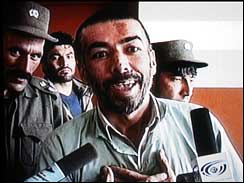
Nope. He's simply guilty of the "crime" of converting from Islam to Christ. Read Michelle about it.
So is that where Iraq is going? I said the only hope I saw was if genuine religious freedom allowed for the preaching of Christ. Is Afghanistan a model? If so, then I see no hope at all.
UPDATE: Two bending-over-backwards disclaimers. First, I do not know a great deal about Islam. Second, if the press reports on Islam as fairly, accurately, and impartially as it reports on Biblical Christianity, then those reports are never to be trusted.
Having said all that, how do you find a happy face for this?
I heard the one Muslim I know -- a genuinely nice and completely likable guy, for all I can tell -- complaining that the press distorts things. But you know, and I know, that if any Christian said anything like this, every other Christian with access to a microphone, telephone, or keyboard would be everywhere denouncing him as a dangerous nutcase, and disowning him from head to toe.
And where did we go before Iraq? Who did we liberate? That would be Afghanistan, a genuine success story on many levels. The always-wrong Bush-hating mainstream media assured us that it could not be done, and we did it in fairly short order.
But what have we today? A man is on trial for his life. Why? What was his crime? Murder? No. What, then? Oh, it's an Islamic country. Was he -- gasp -- telling people the truth about Jesus, and themselves? Was he (cue dramatic music) proselytizing?
Nope. He's simply guilty of the "crime" of converting from Islam to Christ. Read Michelle about it.
So is that where Iraq is going? I said the only hope I saw was if genuine religious freedom allowed for the preaching of Christ. Is Afghanistan a model? If so, then I see no hope at all.
UPDATE: Two bending-over-backwards disclaimers. First, I do not know a great deal about Islam. Second, if the press reports on Islam as fairly, accurately, and impartially as it reports on Biblical Christianity, then those reports are never to be trusted.
Having said all that, how do you find a happy face for this?
"He is not crazy. He went in front of the media and confessed to being a Christian," said Hamidullah, chief cleric at Haji Yacob Mosque."The government is scared of the international community. But the people will kill him if he is freed."
"He is not mad. The government are playing games. The people will not be fooled," said Abdul Raoulf, cleric at Herati Mosque. "This is humiliating for Islam. ... Cut off his head."
I heard the one Muslim I know -- a genuinely nice and completely likable guy, for all I can tell -- complaining that the press distorts things. But you know, and I know, that if any Christian said anything like this, every other Christian with access to a microphone, telephone, or keyboard would be everywhere denouncing him as a dangerous nutcase, and disowning him from head to toe.
Monday, March 20, 2006
Labels, traditions -- a sloppy pre-reflection
Some time I'm going to write a disciplined, well-thought-out post on how useful but imprecise labels are; on how traditionalistically hidebound we "Reformed" people can be -- when we're the last who should be; and on how glorious it is to be a Biblical Christian not chained to repeating the mistakes of the past. I may even throw in some of my thoughts on what is really terrific, and really bad, about denominations.
This isn't that post. In fact, that will probably be three or more posts, won't it?
Over at Pyromaniacs, I just posted an essay titled The laziness of unbelief. In doing some reading on Matthew 11 and Luke 7, I came to find that older commentators seemed to have a different "take" on the question John the Immerser asked Jesus via his students. I was actually a bit startled to find a respected commentator take the line that John wasn't asking for his own benefit; he was actually asking for the disciples' sake. So Jesus' answer was directed to them, not John.
In fact, I found that our man Calvin seemingly took that line as well.
Now, if we were Romanists, and Calvin our magisterium, I'd have to choose between Calvin and my lying eyes. I'd have to explain away the context, explain away how Jesus directs His answer to John (not the students), explain away how He then talks about John (not the students), explain away how the students are barely mentioned, and then only in passing....
But I don't have to do any of that, because I agree with Luther: my conscience is bound to the Word.
But sometimes we "Protestants" have to remind ourselves that sola Scriptura means more than just that we're not bound to the Roman magisterium; we're not strictly bound to the "Reformed" magisterium either. With us, it's pretty well a "duh" -- thank God -- that we're not chained to repeating the mistakes of the Roman past. It's somewhat less of a "duh" that we're equally not bound to repeating the mistakes of the "Reformed" past, either. Calvin, Owen, various Hodges, Warfield, Spurgeon, Edwards, Machen -- all wonderful men, all heroes, all exemplary, all probably our betters, all our teachers, all being dead yet speak, true true true.
But all men, and not masters. They help, they help direct, they inform our faith. But they don't and shouldn't lord it over our faith.
Too many seem to see no middle ground between unquestioning thralldom to history on the one hand, and arrogant indifference to it on the other. Seems to me that there is only one cognitive source to which I owe absolute submission: God's Word. Wisdom lies somewhere betwixt the two extremes.
(I have some more thoughts on this in Mapping the path towards Biblical Christianity.)
This isn't that post. In fact, that will probably be three or more posts, won't it?
Over at Pyromaniacs, I just posted an essay titled The laziness of unbelief. In doing some reading on Matthew 11 and Luke 7, I came to find that older commentators seemed to have a different "take" on the question John the Immerser asked Jesus via his students. I was actually a bit startled to find a respected commentator take the line that John wasn't asking for his own benefit; he was actually asking for the disciples' sake. So Jesus' answer was directed to them, not John.
In fact, I found that our man Calvin seemingly took that line as well.
Now, if we were Romanists, and Calvin our magisterium, I'd have to choose between Calvin and my lying eyes. I'd have to explain away the context, explain away how Jesus directs His answer to John (not the students), explain away how He then talks about John (not the students), explain away how the students are barely mentioned, and then only in passing....
But I don't have to do any of that, because I agree with Luther: my conscience is bound to the Word.
But sometimes we "Protestants" have to remind ourselves that sola Scriptura means more than just that we're not bound to the Roman magisterium; we're not strictly bound to the "Reformed" magisterium either. With us, it's pretty well a "duh" -- thank God -- that we're not chained to repeating the mistakes of the Roman past. It's somewhat less of a "duh" that we're equally not bound to repeating the mistakes of the "Reformed" past, either. Calvin, Owen, various Hodges, Warfield, Spurgeon, Edwards, Machen -- all wonderful men, all heroes, all exemplary, all probably our betters, all our teachers, all being dead yet speak, true true true.
But all men, and not masters. They help, they help direct, they inform our faith. But they don't and shouldn't lord it over our faith.
Too many seem to see no middle ground between unquestioning thralldom to history on the one hand, and arrogant indifference to it on the other. Seems to me that there is only one cognitive source to which I owe absolute submission: God's Word. Wisdom lies somewhere betwixt the two extremes.
(I have some more thoughts on this in Mapping the path towards Biblical Christianity.)
Friday, March 17, 2006
Machen quotation question
It just occurred to me that, with my native readers and those who come over from Pyromaniacs, some pretty smart folks frequent these pages. Smarter than I, in a great many ways!
Maybe you can end a search I've had for decades.
I could swear that I read, at some point, J. Gresham Machen saying that for a pastor not to know Greek makes about as much sense as a professor of French literature not knowing French. But I've never been able to source that quotation; and, as I mean to write at some time, I'm a bit obsessive about not using quotations I can't source.
Does anyone know where that's from?
Maybe you can end a search I've had for decades.
I could swear that I read, at some point, J. Gresham Machen saying that for a pastor not to know Greek makes about as much sense as a professor of French literature not knowing French. But I've never been able to source that quotation; and, as I mean to write at some time, I'm a bit obsessive about not using quotations I can't source.
Does anyone know where that's from?
Tuesday, March 14, 2006
My chief worry about Iraq
As I read about police in Iraq finding 87 bodies from execution-style slayings in the last 24 hours, I've decided the share the concern that's been nagging at me since we liberated Iraq. (Disclaimer: it's an Associated Press story, so it might be totally wrong; but no one denies that there has been a steady drone of violence and mayhem here and there in Iraq.)
Most of the objections to the war strike me as simply silly, childish, or deliberately perverse. However there is one reservation I don't recall ever hearing, and it is the one that keeps troubling me.
It's doctrinal. Specifically, it's with President Bush's theology.
Let me hasten to say that I've no personal doubt that the man is a Christian. But he's a Methodist Christian. While that can mean a lot of things today, in the President's case, it seems to mean at least one troubling thing.
President Bush doesn't seem to grasp the nature of man Biblically. He speaks of the human spirit's universal longing for freedom. He seemed to believe that if we just were to take Saddam Hussein's boot of off the Iraqi people's necks, all would be well. After all, Islam is a religion of peace -- President Bush told us.
I'm no expert on Islam, but I do know a bit about the human heart. Brother Bush's notions about the human heart seem to reflect a liberal, slushy optimism, rather than open-eyed, steely Biblical realism. Left to himself, man will not find the right way -- he will go astray (Psalm 10:2-3; Romans 3:10-19). People are not innocent, let alone good at heart; they're dead in sin, and getting deader (Ephesians 2:1f.). Without Biblical revelation, a people will run wild (Proverbs 29:18, ESV or HCSB).
That is what we see in Iraq, and while I hope and pray for better, I know no reason to expect it.
But democracy worked in America, didn't it?
Well, no. Democracy was the last thing the Founding Fathers wanted. They wanted to create a Republic. Most of the Signers were Biblical Christians, and all of the signers had great respect for the Bible. They knew that the tendency of the human heart is to evil, it is to lust for power and possession, it is to tyranny. They had the moral framework to build a nation of liberty within law, with checks and balances built in, informed by a Biblical worldview and (specifically) a Biblical anthropology.
 John Adams famously and well said:
This foundation is why America has stood for two centuries. To the degree that it has drifted and defected from that original informing Biblical vision, to that degree it is slip-sliding towards tyranny and a cycle of slavery again.
So where is that foundation in Iraq? Can a democracy be built and thrive that is not built on that Biblical anthropology? Can freedom function and thrive without that Biblical framework? Is "freedom" the be-all and end-all, and if they're free, we're done?
I don't think so.
Those are my abiding worries.
Now, I'll say this: if freedom in Iraq means Christians are free to proclaim Jesus, and if the Gospel spreads and prevails, then their freedom will really mean something.
Bush is reputedly quite the poker player. I wouldn't assume that he doesn't have this very thing in the back of his mind.
It's what comes out of his mouth that keeps me worried.
Most of the objections to the war strike me as simply silly, childish, or deliberately perverse. However there is one reservation I don't recall ever hearing, and it is the one that keeps troubling me.
It's doctrinal. Specifically, it's with President Bush's theology.
Let me hasten to say that I've no personal doubt that the man is a Christian. But he's a Methodist Christian. While that can mean a lot of things today, in the President's case, it seems to mean at least one troubling thing.
President Bush doesn't seem to grasp the nature of man Biblically. He speaks of the human spirit's universal longing for freedom. He seemed to believe that if we just were to take Saddam Hussein's boot of off the Iraqi people's necks, all would be well. After all, Islam is a religion of peace -- President Bush told us.
I'm no expert on Islam, but I do know a bit about the human heart. Brother Bush's notions about the human heart seem to reflect a liberal, slushy optimism, rather than open-eyed, steely Biblical realism. Left to himself, man will not find the right way -- he will go astray (Psalm 10:2-3; Romans 3:10-19). People are not innocent, let alone good at heart; they're dead in sin, and getting deader (Ephesians 2:1f.). Without Biblical revelation, a people will run wild (Proverbs 29:18, ESV or HCSB).
That is what we see in Iraq, and while I hope and pray for better, I know no reason to expect it.
But democracy worked in America, didn't it?
Well, no. Democracy was the last thing the Founding Fathers wanted. They wanted to create a Republic. Most of the Signers were Biblical Christians, and all of the signers had great respect for the Bible. They knew that the tendency of the human heart is to evil, it is to lust for power and possession, it is to tyranny. They had the moral framework to build a nation of liberty within law, with checks and balances built in, informed by a Biblical worldview and (specifically) a Biblical anthropology.
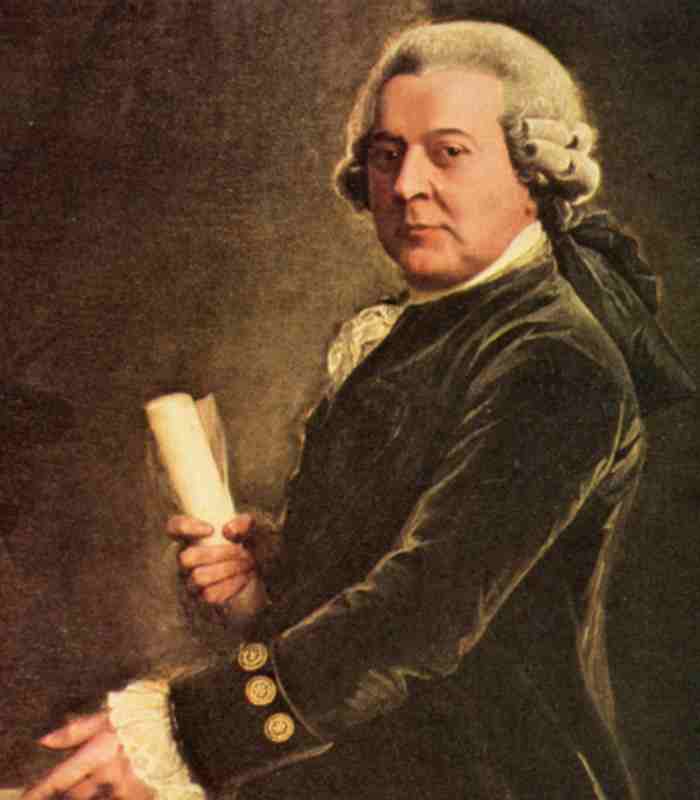
[W]e have no government armed with power capable of contending with human passions unbridled by morality and religion. . . . Our constitution was made only for a moral and religious people. It is wholly inadequate to the government of any other.Make no mistake: to Adams, "morality" would be Christian morality, and religion would be the Christian religion.
This foundation is why America has stood for two centuries. To the degree that it has drifted and defected from that original informing Biblical vision, to that degree it is slip-sliding towards tyranny and a cycle of slavery again.
So where is that foundation in Iraq? Can a democracy be built and thrive that is not built on that Biblical anthropology? Can freedom function and thrive without that Biblical framework? Is "freedom" the be-all and end-all, and if they're free, we're done?
I don't think so.
Those are my abiding worries.
Now, I'll say this: if freedom in Iraq means Christians are free to proclaim Jesus, and if the Gospel spreads and prevails, then their freedom will really mean something.
Bush is reputedly quite the poker player. I wouldn't assume that he doesn't have this very thing in the back of his mind.
It's what comes out of his mouth that keeps me worried.
Thursday, March 09, 2006
The multifacted marvel that is Spurgeon
I've loved and profited from the sermons and writings of Charles Spurgeon for decades. Now isn't the time for a whole essay, but I wanted to note something in passing.
 I read Morning and Evening daily, using e-Sword. Often Spurgeon has a word of uplift or encouragement, or both; sometimes uncannily well-timed. I found his March 9 evening thoughts remarkable on a number of levels.
The text is Genesis 35:18, which reads thus in ESV: "And as her soul was departing (for she was dying), she called his name Ben-oni [= son of my sorrow]; but his father called him Benjamin [=son of my right hand]."
Here are Spurgeon's thoughts:
So what I'm left saying is, "Kids, don't try this at home!" Spurgeon could do it, because God made him Spurgeon. He didn't make me Spurgeon and, no offense, but the odds are staggering that He didn't make you Spurgeon, either.
But thank God He made Spurgeon Spurgeon.
I read Morning and Evening daily, using e-Sword. Often Spurgeon has a word of uplift or encouragement, or both; sometimes uncannily well-timed. I found his March 9 evening thoughts remarkable on a number of levels.The text is Genesis 35:18, which reads thus in ESV: "And as her soul was departing (for she was dying), she called his name Ben-oni [= son of my sorrow]; but his father called him Benjamin [=son of my right hand]."
Here are Spurgeon's thoughts:
To every matter there is a bright as well as a dark side. Rachel was overwhelmed with the sorrow of her own travail and death; Jacob, though weeping the mother’s loss, could see the mercy of the child’s birth. It is well for us if, while the flesh mourns over trials, our faith triumphs in divine faithfulness. Samson’s lion yielded honey, and so will our adversities, if rightly considered. The stormy sea feeds multitudes with its fishes; the wild wood blooms with beauteous florets; the stormy wind sweeps away the pestilence, and the biting frost loosens the soil. Dark clouds distil bright drops, and black earth grows gay flowers. A vein of good is to be found in every mine of evil. Sad hearts have peculiar skill in discovering the most disadvantageous point of view from which to gaze upon a trial; if there were only one slough in the world, they would soon be up to their necks in it, and if there were only one lion in the desert they would hear it roar. About us all there is a tinge of this wretched folly, and we are apt, at times, like Jacob, to cry, "All these things are against me." Faith’s way of walking is to cast all care upon the Lord, and then to anticipate good results from the worst calamities. Like Gideon’s men, she does not fret over the broken pitcher, but rejoices that the lamp blazes forth the more. Out of the rough oyster-shell of difficulty she extracts the rare pearl of honour, and from the deep ocean-caves of distress she uplifts the priceless coral of experience. When her flood of prosperity ebbs, she finds treasures hid in the sands; and when her sun of delight goes down, she turns her telescope of hope to the starry promises of heaven. When death itself appears, faith points to the light of resurrection beyond the grave, thus making our dying Benoni to be our living Benjamin.Here are mine. MS Word counts 330 words in that little devotional. In those 330 words:
- I count fully five allusions to Scriptures besides the target-Scripture.
- I count eleven metaphors (how to count them can be argued).
- I count, apart from the metaphors and Biblical references, six allusions to nature.
- Besides all that, the thoughts are just wonderful, with some heart-brightening, memorable, wonderful words of cheer and encouragement. Just savor this: "A vein of good is to be found in every mine of evil. Sad hearts have peculiar skill in discovering the most disadvantageous point of view from which to gaze upon a trial; if there were only one slough in the world, they would soon be up to their necks in it, and if there were only one lion in the desert they would hear it roar. About us all there is a tinge of this wretched folly, and we are apt, at times, like Jacob, to cry, 'All these things are against me.' Faith’s way of walking is to cast all care upon the Lord, and then to anticipate good results from the worst calamities."
- In that, too, see why Spurgeon is better than Edwards. (One-Dan's-opinion alert in three... two... one....) For all my efforts to like and appreciate Edwards, I just haven't succeeded yet. Jonathan Edwards writes like a bloodless statue. But Spurgeon -- he's been there, he's fought and struggled, and he's got some hard-won encouagement and cheer he wants to share.
- Having said all that, it's hard to say that this really came from the text! This has long cracked me up about Spurgeon, and my love for him. I would never preach like him. Sometimes he does a wonderful job with his text; and sometimes I have to admit that the text is more of a pretext. But what he says is always golden! Spurgeon could see a gum-wrapper in the gutter and preach a heartening, God-exalting, sinner-wooing, saint-strengthening sermon. The gum-wrapper would be incidental.
So what I'm left saying is, "Kids, don't try this at home!" Spurgeon could do it, because God made him Spurgeon. He didn't make me Spurgeon and, no offense, but the odds are staggering that He didn't make you Spurgeon, either.
But thank God He made Spurgeon Spurgeon.
Wednesday, March 01, 2006
Excellent news: Falwell clearly affirms the Gospel
Rather than make this an update to the previous entry expressing concern over the Jerusalem Post report that Jerry Fallwell had said that Jews could go to Heaven without believing in Jesus Christ, I'll simply delete it, and replace it with this great news:
Jerry Falwell has issued A GRACIOUS CORRECTION OF THE JERUSALEM POST. I encourage you to read it completely. In it he unambiguously states
While I am a strong supporter of the State of Israel and dearly love the Jewish people and believe them to be the chosen people of God, I continue to stand on the foundational biblical principle that all people — Baptists, Methodists, Pentecostals, Jews, Muslims, etc. — must believe in the Lord Jesus Christ in order to enter heaven.
Falwell says he was completely misrepresented, and that he cannot even conceive of what provoked the false story.
Praise God for answering our prayers: Falwell used this as an opportunity clearly to re-state and re-affirm the Gospel.
Jerry Falwell has issued A GRACIOUS CORRECTION OF THE JERUSALEM POST. I encourage you to read it completely. In it he unambiguously states
While I am a strong supporter of the State of Israel and dearly love the Jewish people and believe them to be the chosen people of God, I continue to stand on the foundational biblical principle that all people — Baptists, Methodists, Pentecostals, Jews, Muslims, etc. — must believe in the Lord Jesus Christ in order to enter heaven.
Falwell says he was completely misrepresented, and that he cannot even conceive of what provoked the false story.
Praise God for answering our prayers: Falwell used this as an opportunity clearly to re-state and re-affirm the Gospel.
Subscribe to:
Posts (Atom)


 Posts
Posts


