
Showing posts with label Calvinism. Show all posts
Showing posts with label Calvinism. Show all posts
Monday, November 12, 2012
Monday Music - "Mission Accomplished," by Shai Linne
Rap is a genre of, er, okay, music that we don't do much here. But popular Christian rapper Shai Linne laid it down pretty well about the doctrine of particular redemption in this-here number.


Thursday, February 17, 2011
Ephesians 1:3 — a few thoughts
My daily reading had me in Ephesians 1, a familiar and favorite passage. It seemed a good idea to share just a few thoughts with you from verse 3 —
 Thought the second: every one of these blessings are the possession of every last genuine Christian, with no further distinction. Unlike Pentecostals and Deeper-Lifers, Paul never envisions a two-tier Christianity. To him, there are only two tiers, period: in Christ, outside of Christ. In Christ, one possesses every one of the spiritual blessings of which he speaks.
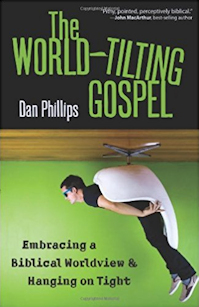
(I develop this a bit more in The World-Tilting Gospel. < /shameless plug >)
Εὐλογητὸς ὁ θεὸς καὶ πατὴρ τοῦ κυρίου ἡμῶν Ἰησοῦ Χριστοῦ, ὁ εὐλογήσας ἡμᾶς ἐν πάσῃ εὐλογίᾳ πνευματικῇ ἐν τοῖς ἐπουρανίοις ἐν ΧριστῷThought the first: the threefold repetition of different words for "bless(ing)" should caution us against always assuming that every word has exactly the same meaning every time it's used. Here, the same author in the same breath uses the word in two senses. When applied to us (the second two uses) it means something like "to bestow a boon"; when applied to God, it means something like "to give praise and glory for bestowing boons."
Blessed! the God and Father of our Lord Jesus Christ, who blessed us with every spiritual blessing in the heavenlies in Christ.... [DJP]
 Thought the second: every one of these blessings are the possession of every last genuine Christian, with no further distinction. Unlike Pentecostals and Deeper-Lifers, Paul never envisions a two-tier Christianity. To him, there are only two tiers, period: in Christ, outside of Christ. In Christ, one possesses every one of the spiritual blessings of which he speaks.
(I develop this a bit more in The World-Tilting Gospel. < /shameless plug >)
Thought the third: the blessings are expressly said to be spiritual. Paul knows full well that God has not, in this life, blessed us with every worldly blessing. Far from it (1 Corinthians 1:26-28).
But it is clear that the apostle's perspective is that, in being blessed with every spiritual blessing in Christ, our lot is far better from those who have been blessed with every worldly blessing outside of Christ.
But it is clear that the apostle's perspective is that, in being blessed with every spiritual blessing in Christ, our lot is far better from those who have been blessed with every worldly blessing outside of Christ.
Thought the fourth: note that Paul goes on to detail what he means by "every spiritual blessing." He means election, adoption, redemption, predestination. Those who kick at those Biblical truths are kicking at God's richest provisions for all His children.
Thought the fifth: Paul is, as we see in chapters 5 and 6, writing to husbands, wives, slaves, slave-owners, and children. And what does he write about, in writing to these people? Spiritual truths in the heavenlies. To be specific, he writes to children, to slaves, to ill-educated commoners, about election and predestination and God's plan for the ages. There is no sign that he would have had any patience with those who hold back those truths as too advanced, meaty, or deep for common Christians.
Thought the sixth: this blessed truth, which drives Paul to praise, is true of you and me if we are in Christ, period, without further qualification. If you are out of work, all this is true of you. If you are in a rough marriage, all this is true of you. If you are in poor health, all this is true of you. If your kids are breaking your hearts, all this is true of you. Nothing on earth can alter or affect this truth.
But only if you are in Christ.
Are you?
If so... blessed be the God and Father of our Lord Jesus Christ!
Monday, September 07, 2009
Chatting with John Reisinger
The subjects of New Covenant Theology in general, and John Reisinger in particular, came up on this thread. As a nice surprise, commenter CR contacted Pastor Reisinger, who wanted to add some thoughts of his own.
John Reisinger was an evangelist for 10 years and a pastor for 45 years. He planted four congregations, and has authored eight books and 10 booklets. You can access his material at the Sound of Grace website.
Just last week I finished listening to a series by Pastor Reisinger on the sovereignty of God, which you can access here. It was a blessing and an encouragement to me.
I've encouraged Pastor Reisinger to make his comments on this thread, and invite you-all to join in as well.
Wednesday, August 05, 2009
Monergism.com lets leaky-Canoneers peddle their goods, BUT...
Most of my readers are probably aware of Monergism.com. It's a pretty wonderful site in many ways, offering articles and sermons and lectures from the broad perspective of Reformed theology.

Now I note that they've got actual representatives of the positions defending both "cessationism" and "continuationism." That is, both men who believe that Scripture is complete and sufficient, and that modern claims to revelatory or attesting sign-gifts are fake and sub-Biblical, and those who want to pretty up the modern claims and sneak in some sort of ongoing semi-revelatory dribble — both, I say, are allowed to present and defend their own positions. In their own voices, with their own arguments.
Interesting, eh? Very interesting.
So I'm immediately wondering: will they have got actual representatives of the positions defending both Covenant Theology and dispensationalism? After all, dispensationalism in no way contrasts with affirming doctrines of grace. Further, the vast majority of dispensationalists stand shoulder-to-shoulder with other Reformed believers in adamantly defending the sufficiency and perspicuity and full authority of Scripture — in contrast to the "continuationist" position.
So one would naturally assume that they, too, would be allowed to present and defend their own approach to Scripture.
(This reasonable openness, for instance, would contrast with the silly obscurantism of the second site discussed here.)
That approach would make sense. It is what clear-eyed rational thinking would move one to expect.
But if I were forced to guess, before checking it out? I'd guess "no." They wouldn't dare let dispensationalists themselves actually present their own view, in their own voices, apart from the caricatured (dare I say "slanderous"?) misrepresentations with which so many "Reformed" tranquilize themselves.
Ah, now I see under Doctrine and Theology a whole section on Covenant Theology. It appears to me that all the speakers are advocates of CT, not critics of it. Okay, so, that's one side.
Oh, but wait. Here it is. I found dispensationalism.
Where is it? Next to "Covenant Theology," as another respectable approach to Scripture?
In your dreams, Phillips.
Ah, no. It is under Heresy and Bad Theology — along with Islam, Open Theism, Postmodernism, Emerging Church, Jehovahs Witnesses, Atheism, Roman Catholicism, and the DaVinci code. Ah, I love the smell of "Reformed" humility and love in the morning.
And yep, what a surprise: far as I can tell, all the speakers are critics of dispensationalism. Not one advocate.

Now that is interesting, isn't it? A position — "continuationism" — that is commonly propped up by such historical and exegetical nuttiness, and very frequently directly causes so much ecclesiastical and personal harm, is presented by its own advocates. Adrian Warnock — a brother who displays an unhealthy obsession with desperate efforts to legitimatize charismaticism, who is so "open" that he can't bring himself to criticize its worst and craziest and most harmful manifestations — he gets to propound his own view.
But dispensationalists cannot be allowed that same respect.
And btw, a huge "Reformed" bogeyman is how supposedly recent dispensationalism is. (I.e. a century or so more recent than Covenant Theology; evidently that was a critical hundred years, emptying the Bible of all previously-undetected wisdom or formulations.)
So help me with the math here. Which is more recent? 1830s? Or 1906?
So Warnock and Piper and Storms get to try their level best to doll up "continuationism" and make it sound Biblical.
But the position held and propounded, to one degree or another, by John MacArthur, S. Lewis Johnson, Alva J. McClain, Eric Sauer, (Spurgeon successor) W. Graham Scroggie, J. Oliver Buswell, Allan A. MacRae, and a host of others — file that one under "Heresy and Bad Theology," and assign it to a hit squad or two.
Sigh.
Pathetic.


Now I note that they've got actual representatives of the positions defending both "cessationism" and "continuationism." That is, both men who believe that Scripture is complete and sufficient, and that modern claims to revelatory or attesting sign-gifts are fake and sub-Biblical, and those who want to pretty up the modern claims and sneak in some sort of ongoing semi-revelatory dribble — both, I say, are allowed to present and defend their own positions. In their own voices, with their own arguments.
Interesting, eh? Very interesting.
So I'm immediately wondering: will they have got actual representatives of the positions defending both Covenant Theology and dispensationalism? After all, dispensationalism in no way contrasts with affirming doctrines of grace. Further, the vast majority of dispensationalists stand shoulder-to-shoulder with other Reformed believers in adamantly defending the
 sufficiency and perspicuity and full authority of Scripture — in contrast to the "continuationist" position.
So one would naturally assume that they, too, would be allowed to present and defend their own approach to Scripture.
(This reasonable openness, for instance, would contrast with the silly obscurantism of the second site discussed here.)
That approach would make sense. It is what clear-eyed rational thinking would move one to expect.
But if I were forced to guess, before checking it out? I'd guess "no." They wouldn't dare let dispensationalists themselves actually present their own view, in their own voices, apart from the caricatured (dare I say "slanderous"?) misrepresentations with which so many "Reformed" tranquilize themselves.
Ah, now I see under Doctrine and Theology a whole section on Covenant Theology. It appears to me that all the speakers are advocates of CT, not critics of it. Okay, so, that's one side.
Oh, but wait. Here it is. I found dispensationalism.
Where is it? Next to "Covenant Theology," as another respectable approach to Scripture?
In your dreams, Phillips.
Ah, no. It is under Heresy and Bad Theology — along with Islam, Open Theism, Postmodernism, Emerging Church, Jehovahs Witnesses, Atheism, Roman Catholicism, and the DaVinci code. Ah, I love the smell of "Reformed" humility and love in the morning.
And yep, what a surprise: far as I can tell, all the speakers are critics of dispensationalism. Not one advocate.

Now that is interesting, isn't it? A position — "continuationism" — that is commonly propped up by such historical and exegetical nuttiness, and very frequently directly causes so much ecclesiastical and personal harm, is presented by its own advocates. Adrian Warnock — a brother who displays an unhealthy obsession with desperate efforts to legitimatize charismaticism, who is so "open" that he can't bring himself to criticize its worst and craziest and most harmful manifestations — he gets to propound his own view.
But dispensationalists cannot be allowed that same respect.
And btw, a huge "Reformed" bogeyman is how supposedly recent dispensationalism is. (I.e. a century or so more recent than Covenant Theology; evidently that was a critical hundred years, emptying the Bible of all previously-undetected wisdom or formulations.)

So help me with the math here. Which is more recent? 1830s? Or 1906?
So Warnock and Piper and Storms get to try their level best to doll up "continuationism" and make it sound Biblical.
But the position held and propounded, to one degree or another, by John MacArthur, S. Lewis Johnson, Alva J. McClain, Eric Sauer, (Spurgeon successor) W. Graham Scroggie, J. Oliver Buswell, Allan A. MacRae, and a host of others — file that one under "Heresy and Bad Theology," and assign it to a hit squad or two.
Sigh.
Pathetic.

Wednesday, June 24, 2009
Calling the Brain Trust: help me source an illustration on sovereign grace Gospel
I thought I knew where this came from, and evidently do not. It is a vivid way of depicting the fatal flaw in Arminian evangelism. It goes something like this:
Can any of you brainiacs give me the book and the page?
Imagine that you walk into a morgue. Corpses on every slab, right and left. Ah, but you bring them a precious gift! You have the elixir of life in your hand! One sip, and they will live!Now, I thought that was from van Til's Defense of the Faith. But I just scanned that, and can't find it. Was it from Murray's Redemption, Accomplished and Applied? I don't have that with me to check.
So you preach to them, you offer them the drink, you appeal to them, beg them, plead with them. At the climax of your utterly convincing, flawlessly-reasoned address, you set the golden chalice on a table in the center and issue an invitation. All they have to do is reach out, grasp the cup, and swallow its wondrous contents! All who will, may come and drink and live!
But that is exactly the problem. They can't. If they have to make the move that connects them to life, none will live, because they're all dead!

Can any of you brainiacs give me the book and the page?
Wednesday, June 17, 2009
On Peter Masters' rant: in which I add only one small thought to Messrs. Turk and Wilson
I was very disappointed to read this rant by Pastor Peter Masters, who I think is a good brother, and who I know is successor to the great Charles H.  Spurgeon at the Metropolitan Tabernacle. I had some thoughts I wanted to share. But for a couple of reasons, I held back temporarily.
Then I saw that Frank Turk said just about everything I wanted to say, only better. So I decided that, when I had the chance, I'd add the one little thing I wanted to add.
But then I saw that Doug Wilson pretty much covered that, as well, except for one specific. However, in his covering, Wilson did bring one little nag at the back of my mind to the forefront.
So, first, the specific:
As disappointing and largely wrongheaded as Masters' rant is (basically he dismisses "new Calvinists" because he doesn't like their music style and their worship style), I am afraid he is at least somewhat in Spurgeon's tradition.

Just, unfortunately, not in Spurgeon's best tradition.
It was an odd thing. Spurgeon enjoyed cigars, even though his practice scandalized orthodox brothers on (what they imagined were) grounds of morality and worldliness. He was bold and unapologetic. I think Spurgeon was right.
At the same time, Spurgeon was death on theater-going. The Bible says precisely as much about theater-going as it does about cigar-smoking: zero. Yet he was thunderously condemnatory. Perhaps his most memorable statement was this:
No. Because he feels free to go to the theater.
As I say, Masters is in that tradition. It just isn't a good tradition.
Now, here's the little thought Wilson brought to the forefront of my mind. Masters complains, of modern would-be Calvinist preachers:
But honestly, that guy is such a small fish (as commenter #11 on this meta quite correctly observes), that I realized it probably would be Kevin DeYoung, whose book (you may recall) I loved.
Making Kevin DeYoung another bad Calvinist.
In which case I say, "Please, God, more bad Calvinists!"
 Spurgeon at the Metropolitan Tabernacle. I had some thoughts I wanted to share. But for a couple of reasons, I held back temporarily.
Then I saw that Frank Turk said just about everything I wanted to say, only better. So I decided that, when I had the chance, I'd add the one little thing I wanted to add.
But then I saw that Doug Wilson pretty much covered that, as well, except for one specific. However, in his covering, Wilson did bring one little nag at the back of my mind to the forefront.
So, first, the specific:
As disappointing and largely wrongheaded as Masters' rant is (basically he dismisses "new Calvinists" because he doesn't like their music style and their worship style), I am afraid he is at least somewhat in Spurgeon's tradition.

Just, unfortunately, not in Spurgeon's best tradition.
It was an odd thing. Spurgeon enjoyed cigars, even though his practice scandalized orthodox brothers on (what they imagined were) grounds of morality and worldliness. He was bold and unapologetic. I think Spurgeon was right.
At the same time, Spurgeon was death on theater-going. The Bible says precisely as much about theater-going as it does about cigar-smoking: zero. Yet he was thunderously condemnatory. Perhaps his most memorable statement was this:
The evangelical faith in which you and Mr. Beecher agree is not the faith which I hold; and the view of religion which takes you to the theater is so far off from mine that I cannot commune with you therein.Unless I badly misunderstand him (and have for years on this), Spurgeon is saying that Beecher cannot be a Christian. Is not saved. Why? Because of immorality (Biblically-defined), or defective views on the Bible or the person and work of Christ?
No. Because he feels free to go to the theater.
As I say, Masters is in that tradition. It just isn't a good tradition.
Now, here's the little thought Wilson brought to the forefront of my mind. Masters complains, of modern would-be Calvinist preachers:
They reject the concern for the personal guidance of God in the major decisions of Christians (true sovereignty), thereby striking a death-blow to wholehearted consecration.To that, Wilson offers this tart and dead-on retort:
And this from a man who a moment before was chastizing the charismatic element in the behavior of the new Reformed! It is bad to lift hands to the Lord like the charismatics (and like John Calvin, but let that pass), but it is not bad to make personal life-decisions as though the gift of prophecy were still operative today? A personal word from God, your name on the envelope and all, is necessary to true consecration? Why can't you just do what the Bible tells you to do?I wondered who Masters was thinking of when I read this. I know he knows Phil; I guess he might occasionally visit Pyromaniacs. The person in that neighborhood who has pounded this particular bongo-drum the most furiously lately would be the Calvinist Spurgeon-loving guy who wrote this and this and this and this.
But honestly, that guy is such a small fish (as commenter #11 on this meta quite correctly observes), that I realized it probably would be Kevin DeYoung, whose book (you may recall) I loved.
Making Kevin DeYoung another bad Calvinist.
In which case I say, "Please, God, more bad Calvinists!"
Monday, February 02, 2009
New category: moderate Calvinism, 5-point Calvinism, hyper-Calvinism, and...
...silly Calvinism.
By this I mean the sort of Calvinism that looks like a self-parody. It takes the truth of God's sovereignty and blots out other balancing Biblical truths such as human responsibility and the evil of evil.
It's the sort of Calvinism that shrinks from calling bad things bad things, as Scripture certainly and unhesitatingly does — even right up against God's sovereignty (i.e. Genesis 50:20).
For instance: I love and respect John Piper. He's done me great good, and I expect he's going to do me a lot more good. I get and give and recommend his books and sermons.
But I'm not a Rom-Piper-an Catholic with Piper as my pope. I'm not obliged to rubber-stamp everything he says and does.
But I think sometimes brother Piper gets a little... well, giddy.
For instance, as I remarked, Piper's statements about Obama on the eve of the election were regrettable and unhelpful, as I remarked at the time. Since then he's evidently discovered to his chagrin (the very thing we here at this blog all knew full well long ago) — that Obama is a merciless, doctrinaire, pedal-to-the-metal pro-abort extremist. Well, that's fine. Welcome aboard, Dr. Piper. The nation could have used your unambiguous voice before the election, but it is welcome now as well.
And yet Piper speaks of "our new President, over whom we have rejoiced...." Um... huh?
Okay, well, that's ambiguous. It could mean... well, I don't think it's a helpful or careful statement. It's nothing I'd ever imagine myself saying.
But that isn't my example of silly Calvinism. There are examples of it (IMHO) in the meta. One that struck me that way is this good brother's comment:
Er, yeah, I certainly do rejoice in the cross, in God's plan of redemption, in Jesus' love-to-the-uttermost, in its wonderful fruits. The statement in itself is a very good statement.
My problem is the context.
Had I been a contemporary, would I have spoken of "Herod and Pontius Pilate, over whom we have rejoiced"? I really don't think so; and I think that, had a friend uttered the words, I'd've slapped him.
So: I can say that it's a good thing that a (half-)black man was able to win the Presidency in America, given our shameful distant history.
But I think I am obliged to say that the election of this man — whether he were white, black, purple or green — is not a good thing, and I do not "rejoice in" him. I can rejoice in good God may bring out of humbling and chastening America for its asinine choice of the greater of many evils; but not in Obama himself and his evil plans.
When we say things like that, as Calvinist, we look silly. Worse, we make Calvinism look silly. Should a victim rejoice in her rapist? Parents rejoice in their child's murderer? Would-be grandparents rejoice in the abortionist who butchers their grandchild?
And, worst of all, since we (I) think Calvinism sees God as the Bible portrays Him, we risk making God look silly.
Da Point: Let's not get our heads so in the clouds that we lose them altogether. We look silly, and that's bad enough; but far worse, we make the sovereign God we talk about look silly.
By this I mean the sort of Calvinism that looks like a self-parody. It takes the truth of God's sovereignty and blots out other balancing Biblical truths such as human responsibility and the evil of evil.
It's the sort of Calvinism that shrinks from calling bad things bad things, as Scripture certainly and unhesitatingly does — even right up against God's sovereignty (i.e. Genesis 50:20).
For instance: I love and respect John Piper. He's done me great good, and I expect he's going to do me a lot more good. I get and give and recommend his books and sermons.
But I'm not a Rom-Piper-an Catholic with Piper as my pope. I'm not obliged to rubber-stamp everything he says and does.
But I think sometimes brother Piper gets a little... well, giddy.
For instance, as I remarked, Piper's statements about Obama on the eve of the election were regrettable and unhelpful, as I remarked at the time. Since then he's evidently discovered to his chagrin (the very thing we here at this blog all knew full well long ago) — that Obama is a merciless, doctrinaire, pedal-to-the-metal pro-abort extremist. Well, that's fine. Welcome aboard, Dr. Piper. The nation could have used your unambiguous voice before the election, but it is welcome now as well.
And yet Piper speaks of "our new President, over whom we have rejoiced...." Um... huh?
Okay, well, that's ambiguous. It could mean... well, I don't think it's a helpful or careful statement. It's nothing I'd ever imagine myself saying.
But that isn't my example of silly Calvinism. There are examples of it (IMHO) in the meta. One that struck me that way is this good brother's comment:
Do you rejoice over the cross or do you weep over it? It was the greatest evil ever committed. And at the same time, it was the greatest good ever accompished! Just an example of how the two can be together in the same event. Praise God for the cross!!!(NOTE: I had further dialogue with that commenter, who seems like a good guy, and may not himself have been making the point I'm criticizing. So this is not a criticism of him, if he doesn't hold this thinking. It is a criticism of the thinking, and of whoever holds it — and a caution to all of us Calvinists to watch how we express ourselves. HSAT....)
Er, yeah, I certainly do rejoice in the cross, in God's plan of redemption, in Jesus' love-to-the-uttermost, in its wonderful fruits. The statement in itself is a very good statement.
My problem is the context.
Had I been a contemporary, would I have spoken of "Herod and Pontius Pilate, over whom we have rejoiced"? I really don't think so; and I think that, had a friend uttered the words, I'd've slapped him.
So: I can say that it's a good thing that a (half-)black man was able to win the Presidency in America, given our shameful distant history.
But I think I am obliged to say that the election of this man — whether he were white, black, purple or green — is not a good thing, and I do not "rejoice in" him. I can rejoice in good God may bring out of humbling and chastening America for its asinine choice of the greater of many evils; but not in Obama himself and his evil plans.
When we say things like that, as Calvinist, we look silly. Worse, we make Calvinism look silly. Should a victim rejoice in her rapist? Parents rejoice in their child's murderer? Would-be grandparents rejoice in the abortionist who butchers their grandchild?
And, worst of all, since we (I) think Calvinism sees God as the Bible portrays Him, we risk making God look silly.
Da Point: Let's not get our heads so in the clouds that we lose them altogether. We look silly, and that's bad enough; but far worse, we make the sovereign God we talk about look silly.
Monday, November 03, 2008
November's free audio download: John Calvin on prayer
 The unabridged edition on Of Prayer and the Christian Life, by John Calvin, is this month's free download.
I remember my first read-through of much of Calvin's Institutes of the Christian Religion, how surprised I was. Calvin has this rep for being an arid, abstract, almost rationalistic brainiac. What I read was nothing of the sort. It was the writing of someone with a deep and ardent love for God, with a big, Biblical vision that sees God everywhere and over all.
Institutes is a devotional!
I'll be downloading.
Thursday, June 07, 2007
CdbgD? (Doctor of Calvidispiebaptogelicology?)
A prospective seminary student emailed me, asking which seminaries are Calvinistic and dispensationalist.
As I've often observed, the two systems should be, yet seldom are, bestest-buddies. The grammatico-historical hermeneutic that yields the doctrines of grace, yields the essentials of dispensationalism — yet the two camps seemed to separate early on, and only recently starting to rediscover each others and start patching it up.
So I don't offhand know of a seminary that is officially both five-point Calvinist and dispensationalist.
Best I can say is that both views at least used to be accepted and represented at what is now Talbot School of Theology, and I'm sure both must be welcome at Master's Seminary. I would think you can be both at Trinity Evangelical Divinity School.
However, I heard that Dallas Theological Seminary ran out its 5-point Calvinists some time ago.
Anyone have anything more up-to-date?
Wednesday, April 04, 2007
The Gospel = "Jesus died for you"?
I pretty surely remember when I was first exposed to 5-point Calvinism. It was in the mid-seventies or so, in the book The Forgotten Spurgeon, by Iain Murray.
I was appalled.
Spurgeon had already caught my attention as a wonderful preacher, but I didn't know that about him. Heck, I didn't know that about anybody! To my certain knowledge, the Gospel was defined as telling people "God loves you, and has a wonderful plan for your life. Jesus died for your sins. Accept His sacrifice, and you will be saved. If you don't accept it, you will be like the criminal who does not accept his pardon, and must serve out your term, because God has done all He can."
So here's this guy saying that God doesn't wait for our permission to save us anymore than a lifeguard waits for permission to save a drowning man. It doesn't depend on "free will."
What? I had thought everybody believed in free will. But this guy didn't.
Next I remember reading from that perspective was John Murray's Redemption: Accomplished and Applied. At this point, I'd gone a bit further in my own studies, and I was less appalled.
But somewhere around there, I'd started re-thinking. I was a fuzzy Amyraldian, though there were all these weird verses about sovereign predestination, election (Ephesians 1:3ff), sovereign and irresistible drawing (John 6), and all. They were hard to fit in, and just sort of "sat there" in my thinking.
One thing that opened my mind was revisiting the actual evangelism of the apostles. If anyone knew how to evangelize, it was these guys. So how essential did they find saying "God loves you, Jesus died for your sins" in Gospel preaching?
So essential that they never said it, at least not on-record.
Nothing changed in the epistles. They regularly talked about God's love and Christ's death for "us" and "you" (Christians), and for the church — but more general expressions of God's distinguishing love and Christ's effectual redemption were few and at best ambiguous.
I thought of this again a couple of days when Dr. S. Lewis Johnson mentioned it to me.
Dr. Johnson has gone to be with the Lord, but he being dead yet speaketh, thanks to modern technology. Believers Chapel provides a real gold mine of Johnson's sermons and lessons, which I am grateful to have on i-pod, or IPod, or iPod, or however you spell that. So I take Dr. Johnson on a lunchtime power-walk with me everyday, or ask him to keep me company as I cook burgers for my family if none of them want to have anything to do with me.
I was listening to The Design of the Atonement: For Whom Did Christ Die? - V, in which Dr. Johnson responds to objections raised against the particular redemption view. Among others, he raises the objection, "But that would mean that you can't tell people you evangelize that Christ died for them."
What would he say? Many Calvinists I respect argue for saying this (as well as "God loves you") in evangelism. Johnson was hard to pin down into any one category completely. Where would he come down on this?
"That's right," was his answer.
He went on to say (I paraphrase) that apostolic preaching and Christ's own words authorize us to say that we are all sinners under the wrath of God; that God loves sinners, and sent Christ Jesus into the world to save sinners; and that any and every sinner who repents and believes in Jesus Christ will certainly be saved. Further, any who wished to, may and is commanded to come.
This, to my mind is apostolic preaching. It really tells the sinner everything he needs to know, without either (A) making unsubstantiable statements about the eternal counsels of the Trinity, or (B) giving false grounds of confidence to the sinner.
On that last note: perhaps I was an exception. But before Christ, as a hard, Christ-rejecting sinner, if you'd told me "God loves you," I'd have said "Great. I believe that, too." If you'd told me, "Jesus loves you," I'd have said, "Whatever." And if you'd said, "Jesus died for your sins," I'd probably have said something like, "I don't believe I have any sins; but if I do, sounds like I'm covered."
Which isn't what we want to communicate, and isn't what the apostles did communicate.
Final note of unnecessary emphasis. Am I revoking the Calvin-card of anyone who differs from me on this issue? Merciful heavens, no. I don't control club membership; it's others who think they do. And I know that none of those who see this differently would communicate any of those false ideas (i.e. everything's okay for the lost, they don't really need to repent).
It's just how one muzzy-headed young man's mind was opened to Biblical Calvinism.
Subscribe to:
Posts (Atom)


 Posts


